Panic Attacks

Panic Disorder Therapy in California

Struggling with Panic Attacks? Effective Treatment Is Available.

Your heart races. Your chest tightens. Your breathing becomes shallow and quick. For a moment, it feels like you might be losing control.

Many people describe panic attacks as feeling like a heart attack or an impending sense of doom. You may begin avoiding places, driving, exercise, or travel out of fear that another attack could happen.

Panic attacks are deeply distressing — but they are highly treatable. With the right support and evidence-based strategies, you can reduce panic attacks and stop organizing your life around them.

What is Panic Disorder?

A panic attack is an abrupt surge of intense fear or discomfort that reaches a peak within minutes, and during which time four (or more) of the following symptoms occur:

  • Palpitations, pounding heart, or accelerated heart rate
  • Sweating
  • Trembling or shaking
  • Sensations of shortness of breath or smothering
  • Feelings of choking
  • Chest pain or discomfort
  • Nausea or abdominal distress
  • Feeling dizzy, unsteady, light-headed, or faint
  • Chills or heat sensations
  • Paresthesia (numbness or tingling sensations)
  • Derealization (feelings of unreality) or depersonalization (being detached from oneself)
  • Fear of losing control or “going crazy”
  • Fear of dying

Panic disorder develops when panic attacks become recurrent and unexpected — and when you begin worrying about having another attack or changing your behavior to prevent one. Panic disorder can have tremendous impact on daily life and lead a person to start avoiding situations where they fear they might have a panic attack.

How Panic Disorder Develops

Panic attacks occur when the brain’s fight-or-flight system is activated. This system is designed to protect you from danger.

In panic disorder, however, the alarm system becomes overly sensitive — like a smoke detector going off when there is no fire.

Many people with panic disorder begin to:

  • Monitor their bodies closely for signs of danger.
  • Try to avoid experiencing bodily sensations and/or places where one worries they might have a panic attack. Avoidance maintains the fear of bodily sensations and never gives one the opportunity to learn they can manage these sensations.
  • Rely on safety behaviors. A safety behavior is anything a person believes is keeping them safe if and when they have a panic attack (for example, always carrying water, sitting near an exit, always having someone with you when you leave your home).
  • Misinterpret normal sensations (like a fast heartbeat) as catastrophic. For example, a fast means "I might be having a heart attack”.

This creates a vicious cycle
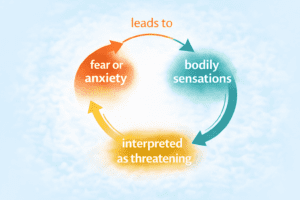
The good news is that this cycle can be broken.

Evidence-Based Treatment for Panic Disorder

How Therapy Helps Break the Panic Cycle

Research consistently shows that Cognitive Behavioral Therapy (CBT) and exposure-based approaches are highly effective treatments for panic disorder. Treatment typically includes:

Psychoeducation

Learning that although the symptoms one experiences in a panic attack are uncomfortable, they are not dangerous. In fact, panic attacks are the brains way of protecting us from a perceived danger by preparing our body to fight or flee a danger. Unfortunately, when a person develops panic disorder this protection system is being triggered unnecessarily, like a false alarm. Panic is a false alarm — not a medical emergency.

Cognitive Behavioral Therapy (CBT)

CBT helps identify and reframe negative thoughts that contribute to panic attacks. Many people with panic disorder develop a fear of their own bodily sensations (like a racing heart for example), leading to increased anxiety and more frequent attacks. Through CBT, you learn to challenge catastrophic thinking and replace it with more balanced perspectives.

Exposure Therapy

Avoidance tends to reinforce panic attacks. Exposure therapy gradually introduces you to sensations or situations that trigger anxiety in a safe and controlled way. Over time, exposure reduces the fear response and helps desensitize you to triggers.

This may include:

Interoceptive exposure exposure to bodily sensations so you can learn these sensations are not dangerous (intentionally bringing on physical sensations like dizziness or increased heart rate).

  • Gradual exposure to avoided situations (driving, flying, being in crowds)
  • Reducing safety behaviors (e.g., always sitting near exits, carrying water “just in case”)
  • Over time, the fear response decreases.

Acceptance and Commitment Therapy (ACT)

ACT can also be a helpful complement to panic disorder treatment by helping you build psychological flexibility. Psychological flexibility is the ability to move forward even when discomfort is present.

Learn more about my approach to therapy and about my services.

What to Expect in Panic Disorder Therapy

Panic disorder therapy is typically most effective with weekly sessions.

Treatment is collaborative and structured. We:

  • Develop a clear understanding of your panic cycle
  • Create individualized exposure exercises
  • Practice exposures together in session
  • Gradually reduce avoidance and safety behaviors
  • Assign structured homework between sessions

Exposure work is always conducted thoughtfully and at a manageable pace.

Panic Disorder vs. General Anxiety

Panic disorder involves sudden, intense attacks of fear and worry about future attacks.

Generalized anxiety disorder (GAD) involves chronic, excessive worry across many areas of life.

If you are unsure which best describes your experience, you can learn more on my Anxiety Therapy page.

Panic Disorder Therapy in Los Altos, CA and Throughout California

I work with adults and older teens struggling with Panic Disorder and Panic Attacks.

I offer:

  • In-person therapy in Los Altos, CA
  • Secure telehealth sessions throughout California
  • Virtual therapy for clients located in Florida

Exposure therapy can be conducted effectively via telehealth.

You can learn more about my therapy approach or read about my background on the about page.

Take the First Step

Panic disorder is highly treatable. Schedule a free 15-minute consultation to discuss how therapy can help.

Schedule a free 15-minute consultation.

Follow by Email
Facebook
LinkedIn