Evidence-Based OCD Therapy in Los Altos, California
I provide evidence-based OCD therapy in Los Altos, CA for adults and older teens struggling with intrusive thoughts, obsessions, compulsions, and avoidance. OCD is treatable, and with the right support, many people are able to regain confidence and live more freely.
You can learn more about my overall approach to therapy and the evidence-based treatments I use here.
What is Obsessive Compulsive Disorder (OCD)?
OCD involves getting stuck in a painful cycle of obsessive thoughts and urges to avoid triggers or engage in compulsions. Obsessions are doubts, images, or “what if” thoughts that can leave you feeling upset, confused, or frightened. Many people with OCD know these thoughts don’t reflect who they are, yet the distress they cause can feel overwhelming.
To cope with the anxiety and distress these thoughts create, you might try to avoid situations that trigger them or engage in compulsions. Compulsions are repetitive behaviors or mental rituals done in an attempt to get rid of an obsession, reduce distress, or prevent something bad from happening.
While compulsions may bring temporary relief, in the long run they actually strengthen OCD and increase distress. Obsessive doubts keep returning, anxiety grows stronger, and the cycle continues. Over time, compulsions can become time-consuming and interfere with daily life, relationships, work, and overall well-being.
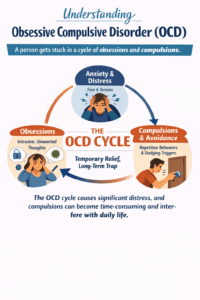
Common Obsessions
People with OCD can experience obsessions around many different themes. Below are some of the common obsessions I see in OCD therapy:
Contamination Obsessions – Intense anxiety, disgust or concerns about germs, bodily fluids, environmental contaminants, household chemicals or dirt (ex. What if my hands are contaminated and I make my family sick?)
Responsibility Obsessions – Fear of being responsible for something terrible happening (for example fire, burglary, car accident), fear of making mistakes that would result in harm to other people (ex. What if I left the stove on?)
Violent Obsessions – Unwanted thoughts, images and intense fears of harming oneself or others (ex. Maybe I'll snap and kill my family even though I love them.)
Sexual Obsessions – Intrusive, unwanted sexual thoughts or images that feel disturbing or inconsistent with your values. These thoughts are not desires or intentions and do not reflect who you are.
Religious/Moral Obsessions (Scrupulosity) – Excessive concerns about morality, being right or wrong, offending God, blasphemy, and/or damnation (ex. Maybe I'm a bad person.)
Order and Symmetry Obsessions – Excessive concerns about evenness or exactness. Obsessive concerns for things to be symmetrical or perfectly organized.
Health Obsessions - Persistent fears about having or developing a serious illness, or intense focus on bodily sensations (often despite medical clearance).
This is not a complete list of all obsessions, so don’t worry if an obsession you struggle with is not listed here. An individual can develop obsessions around almost anything.
Common Compulsions and Avoidance
Checking – Checking that you have not harmed anyone or yourself, checking that you have not made a mistake or that nothing terrible will happen, checking your body or your physical condition
Washing and Cleaning – Excessive handwashing, showering, bathing, grooming or toilet routines; cleaning excessively
Repeating – Repeating routine activities, rereading or rewriting, repeating body movements
Mental Rituals – Self-reassurance, praying to prevent harm, repeating phrases or numbers, mental tracking, figuring out/analyzing, mental review of events, ruminating
Reassurance Seeking – Checking in with someone repeatedly to make sure everything is okay with respect to a particular worry or obsession. Repeatedly researching symptoms online
Other compulsions – Confessing, putting things in order or arranging things until it feels “right”
Avoidance - Avoiding people, places, objects, bodily sensations, or situations that trigger an obsession
A compulsion is anything a person is doing repetitively in an attempt to get rid of an obsession or reduce distress that is triggered by an obsession.